Mostrando postagens com marcador Steve Bissette. Mostrar todas as postagens

08/07/2010

1963: uma série que marcou época e virou história (II).


Reunindo uma equipe renomada que, além de Steve Bissette e Rick Veitch, contava com Dave Gibbons e John Totleben, entre outros, 1963 estreou com estardalhaço. Quando chegaram às lojas em 1993, Mystery Incorporated, The Fury, Tales of the Uncanny, Tales from Beyond, Horus e Tomorrow Syndicate traziam de fato algo que, se não era exatamente “novo”, era na certa inovador. Com personagens inspirados nos heróis Marvel tradicionais (Quarteto Fantástico, Hulk, Homem-Aranha, Thor, etc.), as revistas imitavam os estilos de desenho, diagramação e colorização dos anos 60 (proposta criativa que seria repetida com perfeição na revista Tomorrow Stories Special n°2); a imitação era tão completa que Moore produziu editoriais, seções de cartas e até anúncios publicitários de época (neste caso antecipando o que faria em 1999 na minissérie The League of Extraordinary Gentleman).

O fato é que toda a concepção de 1963, da criação à edição, tinha como modelo as revistas clássicas criadas por Stan Lee, Jack Kirby, Steve Ditko & Cia. Deixando de lado seus roteiros extensos e absurdamente detalhados, o “Afável Al Moore” se inspirou no chamado “Método Marvel”, escrevendo apenas indicações gerais para os desenhistas e trabalhando os diálogos após as páginas serem desenhadas. Mas, para muitos, a imitação do tom bombástico dos editoriais dos anos 60 e mesmo a forma pomposa como os nomes dos autores aparecem nos créditos das HQs, resultou mais numa autopromoção de Moore, do que propriamente numa homenagem aos quadrinhos clássicos. Chamadas às vezes de pastiches dos quadrinhos da Marvel, as seis edições da minissérie variam em qualidade, algumas aproximando-se mais, outras menos, da proposta estética que as originou.

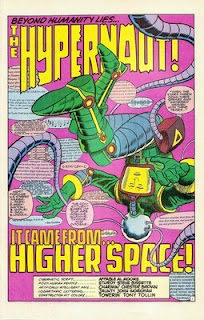
Desenhada por Veitch e arte-finalizada por Gibbons, Mystery Incorporated sustenta-se como uma boa releitura do Quarteto Fantástico (apesar das similaridades com a revista Doom Patrol n°53, criada por Grant Morrison e Ken Steacy um ano antes). Maior destaque vai para o traço “Steve Ditko” da HQ com o personagem Hypernaut e o traço “Jack Kirby” da história com N-Man, ambas desenhadas por Bissette (para as revistas Tales of the Uncanny e Tales from Beyond, respectivamente). Pelo conjunto, a melhor revista é Horus – Lord of Light, que substituiu a mitologia nórdica do Thor da Marvel pela mitologia egípcia, num ótimo roteiro de Moore, desenhado por Veitch e Totleben. As demais histórias deixam a dever, embora a minissérie conte ainda com uma boa edição final, que reúne os diversos personagens e estabelece uma ponte para o “Universo Image” de 1993, anunciando o “Anual Gigante” que reuniria passado e presente.

Essa edição especial de oitenta páginas completaria a proposta estética de 1963, contrapondo os ingênuos heróis do “passado” aos violentos e sombrios personagens dos anos 90. Entretanto, as coisas começaram a dar errado e a já controversa minissérie acabou tendo um final tumultuado. Uma vez que envolveria os principais personagens da Image (Spawn, Wild C.A.Ts., Youngblod, etc.), o “Anual Gigante” precisaria contar com a participação de seus criadores (Todd McFarlane, Jim Lee, Rob Liefeld, entre outros), que na época já não se entendiam muito bem. Além disso, teria faltado empenho de Moore no final, uma vez que a minissérie já havia resolvido seus problemas financeiros e que o esperto Todd McFarlane o havia contratado (a peso de ouro, segundo consta) para produzir uma HQ do Spawn e em seguida as minisséries Violador e Feudo de Sangue (alguns dos piores trabalhos assinados pelo roteirista inglês).

Numa trajetória que envolveu disputas e trapaças, o “Anual Gigante” acabou não sendo realizado e, como efeito colateral, Moore rompeu seu contato com Bissette. Mais tarde, os direitos autorias sobre os personagens de 1963 foram divididos entre os três autores principais, num acordo que inviabilizaria a republicação da minissérie (até o momento). Mas, apesar dos problemas e controvérsias, a incompleta minissérie cumpriu seu papel, inaugurando o subgênero das revistas de super-heróis retrô e das recriações metalinguísticas (linha seguida pelo próprio Moore na sua brilhante fase à frente da série Supremo, que transformou um plágio do Super-Homem numa homenagem metaficcional às HQs clássicas do herói). Muito comentada e imitada nas décadas que se seguiram, 1963 deu início a uma nova fase, em que os quadrinhos de super-heróis se voltaram ao passado para reencontrar seu caminho.

(Para quem quiser saber mais detalhes sobre os quadrinhos de Alan Moore e ler minha entrevista exclusiva com Steve Bissette, basta clicar nos marcadores abaixo.)

05/07/2010

1963: uma série que marcou época e virou história (I).


Entre 1984 e 1989, com as séries Monstro do Pântano, Watchmen e Miracleman, Alan Moore ajudou a revolucionar os quadrinhos de super-heróis. Mas, depois de muito sucesso e de uma aclamação pública poucas vezes vista por um autor de quadrinhos, ele decidiu se afastar das grandes editoras (principalmente devido aos problemas legais com a Marvel, em torno da utilização do nome Marvelman, e às desavenças contratuais com a DC Comics, acerca dos direitos de publicação de suas obras). Além disso, o roteirista jurou jamais voltar às HQs de super-heróis, que considerava então um gênero esgotado. A partir daí, ele passou a se dedicar a trabalhos mais autorais e pessoais, como as histórias em capítulos para a publicação independente Taboo (na qual surgiram From Hell e Lost Girls) e graphic novels especiais (como Brought to Light e A Small Killing).

Aproveitando o renome internacional e estimulado por outros editores independentes (como Dave Sim da série Cerebus), Moore decidiu montar sua própria editora. Nascia então a Mad Love, na qual o roteirista tinha como sócias sua esposa, Phyllis, e a namorada dos dois, Debbie. Pela editora, eles lançaram a revista especial AARGH (“Artistas Contra Agressiva Homofobia Governamental”), coletânea destinada a angariar recursos para serem usados contra uma proposta de lei do governo Margaret Thatcher. Em seguida, veio a série Big Numbers que contava com a fantástica arte de Bill Sienkiewicz, mas que enfrentou imensos (e ainda misteriosos) problemas, sendo interrompida em seu segundo número. Toda a confusão envolvida na interrupção de Big Numbers levou não apenas ao rompimento entre Moore e Sienkiewicz, mas também ao fim de seu casamento a três e à falência de sua editora.

Enfrentando problemas pessoais e financeiros, o roteirista não teve muita escolha, a não ser voltar atrás com sua palavra, retornando ao gênero dos super-heróis. Era 1992 e, na época, a Image Comics representava uma alternativa às gigantes do mercado norte-americano (Marvel e DC Comics), além de ser uma promessa de liberdade criativa (ou mesmo de dinheiro fácil). O primeiro contrato assinado por Moore com a nova editora foi a controversa minissérie 1963 (que também ficaria inacabada e levaria a outro rompimento pessoal). Tudo começou com o convite do quadrinista Jim Valentino para que Moore escrevesse uma edição de sua série Shadowhawk (um dos muitos clones do Wolverine surgidos na época). Moore não se interessou pelo trabalho, mas como contraproposta apresentou, junto com os desenhistas Steve Bissette e Rick Veitch, a proposta para o que viria ser a minissérie 1963.

Toda a concepção desse projeto não pode ser separada do histórico pessoal e do momento que Moore vivia. Tendo rompido “definitivamente” com a Marvel e a DC, o roteirista viu na Image a chance de retornar às lucrativas HQs de super-heróis, sem ter que se associar novamente àquelas editoras. Além disso, ele estava muito descontente com o efeito negativo que suas obras tiveram sobre as revistas de super-heróis, que se tornavam então cada vez mais violentas e cínicas. Assim, embora considerasse que havia feito sua “declaração final” sobre os super-heróis em Watchmen e Miracleman: Olympus, o projeto para a Image tornou-se uma forma de contribuir com a nova editora na disputa contra as duas gigantes do mercado e, ao mesmo tempo, de combater os efeitos negativos do “realismo” dos anos 80. A resposta criativa de Moore veio na forma de seis edições inspiradas nos quadrinhos Marvel do início dos anos 60.

(CONTINUA)

31/07/2009

As entrevistas internacionais do Mais Quadrinhos.


Algo muito bacana que tenho conseguido realizar com o Mais Quadrinhos são as entrevistas com artistas britânicos e norte-americanos. Eu já vinha entrevistando outros quadrinistas desde os anos 90, mas essas conversas por e-mail feitas especificamente para este blog têm algumas particularidades (entre elas o fato de serem realizadas e publicadas também em inglês, tendo ainda como ponto comum questões relativas à obra do roteirista inglês Alan Moore). Com essas entrevistas, tenho tido a oportunidade de falar com pessoas cujo trabalho admiro há muitos anos, descobrindo mais sobre suas criações e esclarecendo pontos de suas trajetórias, além de contar um pouco da história dos quadrinhos.

Então, para aqueles que não acompanharam as primeiras entrevistas ou para quem quiser dar uma nova conferida, aqui vão os endereços para as entrevistas internacionais do Mais Quadrinhos, até o momento:

David Lloyd:
http://maisquadrinhos.blogspot.com/2008/01/virtudes-variadas-uma-entrevista-com.html
http://maisquadrinhos.blogspot.com/2008/01/virtudes-variadas-uma-entrevista-com_16.html
http://maisquadrinhos.blogspot.com/2008/01/virtudes-variadas-uma-entrevista-com_18.html

J.H. Williams III:
http://maisquadrinhos.blogspot.com/2008/03/artes-mgicas-uma-entrevista-com-jh.html
http://maisquadrinhos.blogspot.com/2008/03/artes-mgicas-uma-entrevista-com-jh_19.html
http://maisquadrinhos.blogspot.com/2008/03/artes-mgicas-uma-entrevista-com-jh_21.html

Steve Bissette:
http://maisquadrinhos.blogspot.com/2008/05/quando-penso-em-que-artistas-dos.html
http://maisquadrinhos.blogspot.com/2008/05/talento-monstruoso-uma-entrevista-com.html
http://maisquadrinhos.blogspot.com/2008/05/talento-monstruoso-uma-entrevista-com_22.html
http://maisquadrinhos.blogspot.com/2008/05/talento-monstruoso-uma-entrevista-com_26.html

Dave Gibbons:
http://maisquadrinhos.blogspot.com/2008/12/arte-da-coerncia-uma-entrevista-com.html
http://maisquadrinhos.blogspot.com/2008/12/arte-da-coerncia-uma-entrevista-com_05.html
http://maisquadrinhos.blogspot.com/2008/12/arte-da-coerncia-uma-entrevista-com_10.html

Brian Bolland:
http://maisquadrinhos.blogspot.com/2009/07/um-artista-brilhante-de-capa-capa-uma.html
http://maisquadrinhos.blogspot.com/2009/07/um-artista-brilhante-de-capa-capa-uma_23.html
http://maisquadrinhos.blogspot.com/2009/07/um-artista-brilhante-de-capa-capa-uma_27.html

Se preferir as entrevistas no original, elas podem ser lidas em inglês neste endereço:
http://maisquadrinhos.blogspot.com/search/label/Interviews

28/05/2008

A Monstrous Talent: an interview with Steve Bissette, part5.


To finish, Steve Bissette speaks about a new book on Neil Gaiman's works and also his plans for the future.

Wellington Srbek: It seems to me that your dearest creation, your “pet” project is Tyrant, a comic book series about the life and death of a Tyrannosaurus Rex. You have put lots of love and research in that one, haven’t you?

Steve Bissette: Yes, sure did. I loved doing it, and I'm still mighty proud of what was completed. I hope to return to it one day, though I'll never again be at the creative peak I was at in 1994-97 when I was doing Tyrant. Such is life.

WS: Your last work for a mainstream publisher was the Swamp Thing-related “Jack in the Green” short story, written by Neil Gaiman and inked by John Totleben. I think you have partially answered this question already, but please explain to us why you had announced your retirement from the comics industry after that work in 1999.
.
SB: Well, the long answer is already online -- go to: http://albert.nickerson.tripod.com/creatorsbillofrightsbist8.html.
Some of that reiterates the whole 1963 debacle, which I've just articulated anew for you above, Wellington; forgive the redundancies, please.
Since that all emerged from my old friend Dave Sim challenging me, note that Dave Sim's response is buried here (scroll down a ways, it's there): http://groups.yahoo.com/group/cerebus/message/103644.
Beyond that, there's also some follow-up on http://www.creatorsrights.com/. Go to: Creators Rights Forum Index -> Creator's Rights Discussions on the discussion board. And then: the thread entitled: "Post subject: Steve Bissette's letter: Dave Sim and 1963..." -- my letter, and Dave's reply, are there complete, followed by some conversation about relevant issues.
The last straw for me in 1999 was the realization comics was a dead end professionally. I won't go into the particulars, beyond the larger issues addressed in my letter to Dave Sim. It's not important any longer.
To touch upon a key point in my letter to Dave Sim, linked above, I'd arrived at a point in life I saw my teachers at the Kubert School reach in their late 40s. As a result of seeing my own situation as a life cycle issue in part, I didn't take it personally, but it was clearly time to leave the room for good.
My farewell signature at the end of "Jack-in-the-Green" really was my farewell. I'd had it with the comics industry, and nobody cared I was leaving, really. Neil's script summed up all my feelings about the community I'd once been part of: the village was ravaged with plague and there was nothing left to 'live for' there. Torch it. So, I did -- I torched it, via the story, and I left. That last page spoke volumes for me, there was and would be no better grace note to depart with.

WS: In the last decade, you have worked as a teacher and also written short stories, essays and critics. There’s for instance a new book on Neil Gaiman’s works to be published later this year. But you are also preparing a comeback to the comics medium, right? Something involving Tyrant and the 1963 characters you own. What can you tell us about that?

SB: Ah, let's see what happens. I have plans and hopes and dreams, like anyone, but as the old joke goes, "How do you make God laugh? Make a plan." We'll see what really comes to fruition in time.
I'm DONE in the American comics industry. That's over. Nothing has changed there in the years since I announced my retirement in 1999, except for the worse. Don't bother looking for me there.
But that hardly means I've been unproductive. I'm drawing some new comics for publication these days, and enjoying it. I'm being selective about doing it pretty much exclusively for venues supporting younger cartoonists -- the Accent UK Zombies anthology, Trees & Hills (a local New England coalition of cartoonists), and CCS or CCS-related projects, like Sundays, Dead Man's Hand and the upcoming Secrets & Lies. I do it only if I'm invited. That's worthwhile to me just now; there's no money in any of it, so fuck it, I do it for love only, in part to support the new generation's efforts.
Any fantasies you may harbor that existing publishers want my work can be easily remedied by the hard reality of the situation. I've had plenty of fruitless, time-wasting tangos, from a year of dancing with the late Byron Preiss over an aborted trio of Swamp Thing novels (Byron would not negotiate the contract, and then refused to pay the advance) to the various 1963 reprint ventures, including two overtures from Image and a rather hilarious exchange with DC Comics. As I've noted on my blog in the past, the only offers I've fielded in the past seven years in comics were from publishers fishing for free Bissette work. That, I can do myself, thank you; I've published, co-published, and self-published. If there's no money in it, I'm quite capable of doing everything myself, thanks, and choose not to, especially in the current market.
Let's see, there's other things: I've done some illustrations for friends's book projects and magazine articles, and I wrote a book-length essay for Rick Veitch that may see print later this year. There's a t-shirt company that's licensing my art, which is cool, and a cell phone game of The Fury was licensed in 2007; I've got my own projects with The Fury, N-Man and Hypernaut underway, and posted some new material on those on my blog. If it's fun and personally satisfying, I'll do it; otherwise, life is too short.
I occasionally get to dabble with the wedding of comics and cinema, which I enjoy. My son Daniel and I drew up a dummy Christian comic tract for my friend Lance Weiler's Head Trauma (2007), and that was great fun; Lance involved me creatively in the process, and we crafted individual panels and pages to resonate with the film after Lance showed me the rough edit of the film, which was a very satisfying collaborative venture. I subsequently packaged a "Jersey Devil" mini-comic for the DVD re-release of Lance Weiler and Stefan Avalos's seminal digital feature The Last Broadcast, working with some of the pioneer students at CCS. I'm presently working with a couple of filmmakers on short film adaptations of some of my own comics stories; I can't say much about that now, except to note I've seen the rough edit on the first short film, and that's fun for me, too. There's no money in any of this, either, which is fine -- I retain legal rights to my properties, and co-own the films with the filmmakers, so it's all good. As long as it's pleasurable, I pursue it.
I've got a few irons in the fire with the book industry; the grass isn't any greener there, I've no illusions about that, but it is where comics have gone and where my passion as a writer is most relevant. I've had some luck, good and bad, over the years. It's going well of late. Most recently, I co-authored The Prince Of Stories: The Many Worlds Of Neil Gaiman for St. Martin's Press, working with Hank Wagner and my dear friend Chris Golden. I'm illustrating the limited hardcover edition for Cemetery Dance right now. I illustrate a book a year, and have since 1988, but nobody in comics notices or gives a hoot about that. My pal Joe Citro and I are working on a new project, a companion to our still-popular regional book The Vermont Ghost Guide, and that'll be fun, and I'm working on a graphic novel anthology project based on swamp monster stories I penned over the years. But we'll see what find a home, and what doesn't -- I've little control over it, save for my own investment of love, time and work.
I occasionally try to get some fire going for Tyrant again. Nobody in a position to help me is clamoring for it, though, and I can't afford the enormous investment of time and energy I once gave to it sans a venue -- and so it goes. Before beginning work full time teaching at the Center for Cartoon Studies (back in 2005), I approached Chris Staros at Top Shelf with Tyrant -- his response: if I'd had a SECOND full volume of NEW WORK ready to go, Top Shelf would be interested. If not, no go. Since my whole overture concerning a Tyrant collection of existing material being published was to fire off a 'signal flare' to see if it's financially viable to continue working on the project, having Chris expecting me to have one-to-three years of NEW work in hand first pretty well defeated that proposition. If I had that, I'd still be self-publishing. As it is, I just can't afford the time -- though I hope to change that in the near future, if I can find a perch anywhere in the book industry for the project.
For now, though, CCS and my family are all that matter -- and the most rewarding places to put my energy. At CCS, I am creatively engaged in the next generation of cartoonists, and I get to share some of what I know; it's important that each generation passes on its knowledge to the next, as Joe Kubert did for me. That's a real strong drive for me right now, far more important than almost anything else -- except for my relationships with my now-adult children, my beloved wife Marge, and my immediate circle of friends and family. I'm happy to stay close to home these days, and invest my public life 150% into CCS. No more conventions for me.
But that doesn't mean no more comics. I draw for myself all the time, and some of it sees print. CCS has rekindled a lot of old flames, and I'm drawing more new comics for myself than I have in years.
Who knows? Someday, a rich publisher who happens to be a Bissette fan may make it possible for me to continue into my sunset years, if I'm not too old to hold a pen and a brush. If I'm too old then, well, c'est la vie. For the time being, I'm plenty active, and have plenty to do and more to look forward to.
It's been a great run, all in all, and some of my work is still in print around the world. I still get fan mail and letters expressing how my work touched people's lives, changed them for the better. I'm thankful, I've been pretty lucky over the years. That's more than a lot of cartoonists get in one lifetime.

WS: Thank you a lot for this interview, Steve!

SB: I'm constantly amazed how global the readership for some of the work I've done truly is. My deepest thanks to all in Brazil who may have laid eyes on Swamp Thing or something else I may have had a hand in, and I hope it repays in some measure all the pleasure I've derived over the years from the doing of it.
I should also add that I'm a huge fan of the José Mojica Marins films and comics, particularly his Zé do Caixão character, films and comics from the 1960s. I was privileged to meet, interview and dine with José when he first came to America's 'Chiller Theatre' convention in New Jersey over a decade ago, and thanks to DVD have managed to see all his extant films since then.
I also love many other Brazilian films and comics, though it's the more unusual films -- like Joaquim Pedro de Andrade's adaptation of Mário de Andrade novel Macunaíma, and the marvelous Como era gostoso o meu francês, which was made around the same time (1969-71) -- I tend to gravitate to. Thanks to a number of fans in Brazil, I've been able to trade for copies of the Brazilian DVD releases of these films recently, as well as a few of the recent low-budget zombie films made in your country. I love it all!

26/05/2008

Talento Monstruoso: uma entrevista com Steve Bissette, parte4.


Parte final de nossa entrevista exclusiva e Steve Bissette explica em detalhes tudo que aconteceu com a minissérie 1963 e seu “Anual perdido”. Para completar, algumas palavras sobre Zé do Caixão e Macunaíma!

Wellington Srbek: Outro projeto que gerou controvérsia ao longo dos anos foi a minissérie 1963, lançada pela Image Comics em 1993. Embora Alan Moore tenha dito no fim dos anos 80 que ele jamais escreveria uma nova história de super-heróis, após os problemas financeiros causados pela abortada série Big Numbers, ele retornou ao gênero com um pastiche dos primeiros quadrinhos da Marvel. Em termos de qualidade, a minissérie tem seus altos e baixos. De qualquer forma, 1963 é mais lembrada hoje por seu “Anual perdido”. Qual foi seu envolvimento nesse projeto?

Steve Bissette: Eu fui o “ponto zero”, podemos dizer. Tudo começou com um telefonema para mim, em 1992. Larry Marder estava ligando em nome de um dos sócios fundadores da Image, Jim Valentino, que na verdade não estava tão interessado que eu trabalhasse com a Image, mas sim que através de eu trabalhar com a Image ele conseguisse que Alan Moore trabalhasse com a Image. Era Alan que Jim realmente queria – mas eu era o único acesso aberto para eles, via a amizade de Larry COMIGO. Alan já tinha esconjurado participar de convenções anos antes (para saber as razões, leia o excelente The Naked Artist: Comic Book Legends de Bryan Talbot, p.19-20) e cultivava uma imagem de ser, bem, inacessível. Ele já tinha declarado, numa entrevista ao The Comics Journal, que a Image Comics era “a cocaína de crack dos quadrinhos” (comparada à Marvel que seria a “cocaína” dos quadrinhos), e a Image buscava legitimação e o envolvimento de criadores mais renomados para elevar seus próprios produtos. Valentino na verdade queria convencer Alan e eu a trabalharmos em Shadowhawk, sua revista na Image com o justiceiro que quebrava espinhas. Nós não estávamos nem um pouco interessados nisso, mas – bem, eu liguei para Alan e Rick Veitch, após falar com Larry e então com Jim Valentino. Pareceu-me que era algo que merecia alguma consideração fazermos nosso próprio quadrinho para a Image, e Alan e Rick concordaram.
Valentino estava jogando verde, na verdade, e o telefonema de Larry para mim pegou Alan, Rick e eu no momento certo. Estávamos cada um de nós em diferentes estágios de desencantamento com o experimento de Kevin Eastman na Tundra Publishing. Alan estava numa maré financeira particularmente baixa, e foi durante esse período que ele me ligou pedindo conselhos de como sair do atoleiro fiscal em que estava, pelo qual eu me sentia parcialmente responsável. A Taboo pagava apenas 100 dólares por página, e From Hell – mesmo com a recente aquisição e as reedições pela Tundra – devorava tanto de seu tempo, que Alan tinha pouco tempo ou energia sobrando. From Hell, Lost Girls e seu romance A Voz do Fogo eram todos trabalhos monumentais, mas rendiam muito pouco. Com isso, Alan não tinha tempo para se dedicar a trabalhos que pagassem melhor – caso os encontrasse. Assim, minha sugestão inicial, que na época ele aceitou como viável, foi a edição dos roteiros de From Hell na forma de livro, o que levou ao mal-fadado From Hell: The Compleat Scripts. Borderlands Press e Spiderbaby Grafix (minha firma) ambas pagaram a Alan pelos direitos e eu paguei a Eddie Campbell para fazer novas ilustrações, tudo com o objetivo de poder subsidiar melhor o trabalho de Alan e Eddie na série – isso acabou mal, contudo. O Volume 1 foi um grande sucesso e o Volume 2 estava ilustrado, diagramado e pronto para impressão, quando a compra dos direitos para o filme From Hell descarrilou nosso projeto. Nesse momento, Alan ficou cheio da grana e o projeto de edição dos roteiros passou a ser um problema para o pessoal do filme, por questões legais – Alan e Eddie tinham esquecido de mencionar o projeto durante a negociação dos direitos do filme. Boderlands ficou furiosa, e com razão, [mas] eu não vi vantagem em entrar numa batalha legal contra Alan e Eddie pelo quê era, no final das contas, uma obra deles, e convenci a Boderlands que devíamos simplesmente nos conformar. É uma pena, pois era um ótimo projeto; que era bem-sucedido e poderia continuar a ser, mas eu não ia me envolver em batalhas legais com Alan e Eddie, ponto final. Assim, um projeto bem-sucedido, originalmente concebido para resgatar Alan financeiramente, sem que ele precisasse fazer qualquer trabalho, foi afundado. C’est la vie.
Bom, não estou contando isso para reabrir velhas feridas, mas para explicar como Alan estava numa situação-limite em 1992. O que quer que se pudesse conceber para fazê-lo ganhar mais dinheiro NÃO poderia envolver o tipo de tempo e energia hercúleos requeridos pela roteirização de From Hell e Lost Girls – e lembre-se também de que Alan ainda estava cambaleando no desastre de Big Numbers, que o tinha esgotado tanto emocional quanto financeiramente. Graças a 1963 e à Image Comics, Alan estava fora de sua cratera fiscal no início de 1993 – mas muito chão foi percorrido entre 1992 e 1993, e isto foi nosso projeto para a Image.
Alan estava pessoalmente desgostoso com o rumo que os quadrinhos de super-heróis tomaram no fim dos anos 80 e início dos anos 90, e se sentia responsável por essa tendência graças a Watchmen. Logo, em mais ou menos uma semana de telefonemas e faxes (o e-mail não existia ainda) entre mim, Alan e Rick, nós resolvemos que: (a) SE fizéssemos qualquer coisa para Image, nós três trabalharíamos no “Método Marvel” para que Alan evitasse ter que escrever trabalhosos roteiros completos, e (b) o projeto teria que remediar a depravação e a negatividade dos quadrinhos de super-heróis daquele momento. Logo, Alan concebeu 1963, que seria composta de seis edições de falsos quadrinhos de 1963 – escritos, desenhados, coloridos e impressos como se tivessem sido publicados em 1963, refletindo esse conceito em cada aspecto de sua forma final – culminando num Anual Gigante à moda antiga, que traria os personagens de "1963" confrontando os personagens da Image de 1993. Esse seria o veículo para Alan confrontar o que os quadrinhos de super-heróis haviam sido – aquilo com o quê havíamos crescido – e o que o gênero havia se tornado, usando diretamente “a cocaína de crack” dos quadrinhos, o elenco de personagens da Image.
Bom, a mosca na sopa desde o início foi a Image. Deixe-me explicar isso – e entenda desde o início que se trata apenas de minha percepção dos eventos. Eu estou certo (eu sei) que você terá uma perspectiva diferente de Rick ou Alan, caso eles sequer se dêem ao trabalho de discutir a questão. Eis todos os fatores no conceito do Anual e o que aconteceu (ou, mais importante, não aconteceu):
1. Por sua própria natureza, o Anual requeria que TODOS os criadores da Image participassem do projeto e permitissem que usássemos seus personagens. Essa concepção cresceu exponencialmente para o conceito de que Rick e eu deveríamos desenvolver o Anual inteiro a partir das notas de Alan (que se tornariam um roteiro) e desenhar NOSSOS personagens de “1963”, e cada criador da Image deveria então desenhar SEU respectivo personagem nas páginas e quadros apropriados.
2. Desde o primeiríssimo telefonema, era ALAN que a Image queria. Era com ALAN que Jim Valentino queria trabalhar, não comigo ou Rick Veitch. Como Larry Marder mais tarde colocou, Rick e eu éramos literalmente “os rebocadores”, puxando o grande navio para o ancoradouro. Nós permanecemos sendo os rebocadores por todo o processo; para muitos dos sócios da Image, nós éramos meros peões no seu jogo de xadrez da indústria dos quadrinhos.
3. Compreenda também que os sócios da Image eram todos altamente competitivos, muitas vez infantilmente competitivos. Eram todos jovens, um deles (Rob Liefeld) mal saído da adolescência, e estavam engajados em disputas imaturas uns com os outros. Se quiser compreender esse aspecto da Image, Spittin' Image de Don Simpson diz tudo; esse continua sendo, na forma como vejo, o retrato mais fiel do que realmente estava acontecendo ali.
4. Valentino era o membro mais velho, e de muitas maneiras o cara que não fazia parte da turma – mesmo assim, ELE tinha de repente “faturado” Alan Moore. Logo, Valentino era agora um alvo – ao menos dois dos sócios da Image tinham agora a intenção de passar por cima dele – e Alan Moore era o prêmio.
Assim, sem seguir por toda essa história em detalhe (novamente, veja a entrevista de Rick Veitch para o The Comics Journal e a minha própria no n°185 para as particularidades), no fim Todd McFarlane passou a perna em Valentino telefonando para Alan Moore diretamente (uma vez que eu tinha feito a ponte entre a Image e Alan, a porta enfim estava aberta).
Todd passou a perna em 1963, ao fazer as quatro edições com os quatro roteiristas convidados – Frank Miller, Dave Sim, Neil Gaiman e Alan – todas publicadas antes de lançarmos 1963 Book One: Mystery Incorporated em abril de 1993. O impacto direto que isto teve sobre 1963 e Alan foi o recebimento de um gordo cheque, e Alan passar a trabalhar para Todd também na minissérie Violador. Logo, ele teria menos e menos tempo para dedicar a 1963, e menos e menos razões para devotar tempo a nosso projeto, já que seus dramas financeiros tinham acabado.
Jim Lee passou a perna em Jim Valentino ao anunciar – em meio a uma insana conversa cruzada entre intermediários, em julho de 1992, na San Diego Convention – que ele faria o Anual. A bizarra “conversação”, conduzida inteiramente por subalternos, foi dirigida a mim e a Rick quando caminhávamos da mesa da Tundra para o salão onde acontecia um debate da Image (na verdade, era mais como um comício!). Valentino tinha combinado conosco, através de telefonemas para Alan, que ele poderia anunciar que o projeto 1963 estava acontecendo. O que não sacamos totalmente era que Jim Lee estava agora se insinuando no processo – ele, através de seu subalterno, estava TIRANDO o Anual de Valentino. Nós não compreendemos completamente o que estava acontecendo; devíamos ter dito “não”. Mas estávamos sendo levados da mesa para o salão e tínhamos pessoas em cima da gente pressionando para que Jim Lee “fizesse” o Anual – como eu disse, nós deveríamos ter apenas dito “não”. Mas, quando chegamos ao salão, onde literalmente centenas de fãs em polvorosa assistiam aos sócios da Image num estranho debate semelhante a um comício, Jim Lee já tinha, com nossa cumplicidade, arrebatado de Valentino o Anual. No palanque, com nossa aquiescência, Valentino anunciou que tinha Alan Moore e 1963 – e Jim Lee literalmente roubou sua glória ao imediatamente anunciar que ELE faria o Anual. A multidão foi à loucura, Jim Valentino parecia apagado e Lee tomava seu lugar ao sol – e Rick e eu ainda não sabíamos bem o que tinha acabado de acontecer.
Bem, com o tempo, nós descobrimos. Eu continuo achando que perdemos controle do importantíssimo Anual daquele momento em diante. Rick meio que me culpa por não ter continuado à frente do projeto com ele, e eu não posso negar que perdi minha paixão pelo empreendimento durante a primavera de 1993. Uma vez que Alan se enchia de grana com Spawn, tornou-se cada vez mais difícil mantê-lo envolvido [com 1963]. Eu apenas vi umas poucas páginas do roteiro para o Anual, que nós deveríamos estar desenhando pela época em que terminamos o trabalho em 1963 n°4 – mas nós não conseguimos. Dois dos sócios da Image – Erik Larsen e Mark Silvestri – informaram-nos de que estavam a bordo, mas nenhum dos outros respondiam a nossas ligações e questionamentos. Contudo, não podíamos fazer o Anual sem eles. Na verdade, nós estávamos batendo de cara com o caos da Image.
Não conseguimos ter Jim Lee ao telefone uma vez sequer – eu ainda tenho uma cópia do fax que Lee nos enviou, com seu desenho de Planet (da revista Mystery Inc.), dizendo para não nos preocuparmos que ele estava a bordo – mas, até onde sei, não ouvimos mais nada dele. Ele tinha apenas “pegado” o Anual para roubar o aplauso de Valentino na San Diego Con. Não compreendemos inicialmente como os jogos de poder e ego na Image estavam afetando Valentino, mas agora estávamos aprendendo em primeira mão.
Mais frustrante para mim pessoalmente foi a contínua desconexão de Alan do processo. Isso acabou resultando na minha desconexão do processo também. Eu não descobri até anos mais tarde que Alan teve uma crise pessoal que agravou isso – o que mostra quão à margem de tudo eu tinha sido relegado. Eu vim a descobrir isso após anos sendo culpado pelo colapso do Anual; não posso dizer que estou em paz com como tudo acabou. Ao menos eu compreendo, em retrospectiva, um pouco mais de tudo que aconteceu, mas isso não muda os acontecimentos ou permite uma mudança nos acontecimentos.
Para mim, tudo se resume ao fato de os participantes-chave – Alan, Jim Lee, os sócios da Image – não poderem ser reunidos para completar o Anual. Era um conceito de Alan e os sócios da Image só se importavam em falar com Alan – mas ele não estava tomando qualquer iniciativa para isso acontecer.
Bom, compreenda, Rick e eu cultivamos isso também. Não estou falando mal do Alan. Rick e eu (bem estupidamente) tínhamos assumido todas as incumbências editoriais desde o início, sem pagamento extra por esse trabalho; nós fizemos isso inicialmente para nos certificarmos de que a série aconteceria, e devido a nosso amor e preocupação com Alan, que não tinha vontade de coordenar coisa alguma – ele só queria se divertir um pouco e ganhar alguma grana; então nós orientamos tudo para que tomasse o mínimo de tempo possível de Alan. Rick e eu nos tornamos os editores, incentivadores e auxiliares; enquanto a série se arrastava e os projetos de Todd McFarlane com Alan levavam a mais e mais trabalhos para a Image, foi se tornando crescentemente impossível manter Alan envolvido [com 1963].
Rick e eu acabamos montando as páginas de editorial e seções de cartas, que antes Alan tinha saboreado fazer. Foi um processo de erosão, que crescentemente afetou o Anual, que absolutamente REQUERIA o envolvimento de Alan. Afinal, os sócios da Image queriam trabalhar com ALAN, não comigo ou Rick – nós éramos na melhor das hipóteses, como foi deixado claro para nós, apenas funcionários. Intermediários.
Deveríamos estar trabalhando no Anual quando 1963 n°s 4, 5 e 6 estavam sendo letrerados, arte-finalizados e coloridos, mas nada tinha sido feito. Em abril de 1993, eu dei um basta: formalmente anunciei a todos envolvidos via fax que eu desenharia minha parte no Anual, mas não mais desempenharia funções editoriais, já que nem Alan Moore ou Jim Lee sequer atendiam telefonemas sobre o assunto. Eu sentia então e ainda penso hoje que foi uma avaliação e uma ação razoáveis – eu esperava, na época, que isso pudesse motivar alguma ação imediata, um mutirão para realizar o Anual, mas tudo o que fez foi deixar o Rick puto comigo. Ninguém se importou que eu estivesse recuando – exceto Rick, que sentiu que eu tinha deixado a peteca cair em nossa parceria. Não houve mutirão, para minha surpresa e desalento; foi como se eu fosse totalmente dispensável, e eu perdi toda a paixão pelo projeto.
Compreenda também que meu casamento de treze anos estava se desmantelando na época, sob circunstâncias muito penosas, e nós temos dois filhos. No verão de 1993, eu voltei minha atenção para a mais imediata crise dentro de minha própria família e deixei a sorte decidir as coisas. Alan se afastou cada vez mais, embora tenhamos mantido um hesitante contato telefônico durante aqueles meses, Rick estava cada vez mais puto comigo, e eu cada vez me importava menos. O Anual jamais aconteceu – nenhuma surpresa para mim – e nunca acontecerá.
O Anual, por natureza, era tão ligado a seu tempo – ao que estava acontecendo nos quadrinhos, nos quadrinhos de super-heróis e na Image em 1992-93. Nós não tínhamos idéia, salvo pelas ocasionais ligações sinistras de Larry ou Jim V., que porcariada a Image tinha se tornado também (o que logo se manifestou quando Rob Liefeld foi isolado e exorcizado do grupo). Mas não tínhamos controle sobre isso – e eu pensava então, e penso agora, que Jim Lee devia ter feito o que Jim Valentino fez para o resto da série, e honrosamente nos pastoreado através do processo necessário para completar o Anual. Mas até onde vejo, o único interesse dele era marcar presença sobre Valentino e o projeto, como um cão marcando seu território; era uma mentalidade de matilha em ação. Jim Lee não se importava com 1963 ou o Anual – ele anunciou publicamente que daria uma pausa nos quadrinhos na primavera de 1993. E foi isso, até onde me competia saber, e era tarde demais para convencer Valentino a assumir o comando – para ele bastava daquele projeto. Rick e eu não éramos da turma, na melhor das hipóteses, e agora éramos completamente dispensáveis. Alan estava trabalhando com diversos sócios da Image em todo tipo de projeto, para o benefício de todos. Nós – e 1963 – tínhamos servido a nosso propósito. Fomos descartados.
Francamente, como Larry Marder explicou pacientemente para mim na época, Rick e eu éramos “apenas rebocadores” – nós não éramos pares ou iguais aos olhos dos sócios da Image – e simplesmente não tínhamos força bastante para puxar os monstruosos navios Jim Lee e Alan Moore para o mesmo ancoradouro. Foi assim que tudo ficou, e é assim que ainda está.
Todo mundo ficou com um gosto ruim na boca pelo Anual não existir – foi um constrangimento para a Image e para Alan, por anos um ponto de atrito entre mim e Rick, e um poço sem-fim para perguntas como a sua, Wellington. Não importa quantas vezes eu ou Rick a respondemos, ela sempre volta.
Mas nós todos ganhamos um monte de dinheiro com 1963, o que tornou mais ridículo então e agora o fato de o Anual nunca ter acontecido. Se o tivéssemos completado, nós ainda estaríamos ganhando dinheiro com as coletâneas.
Compreenda, no entanto, que dinheiro era parte do problema. Ganhamos mais dinheiro com 1963 do que eu jamais tinha ganhado com quadrinhos. Jamais. Mas, uma vez que já não estávamos trabalhando a partir daquela estranha e divina conjunção de inspiração, fome e necessidade, a simples vontade de trabalharmos juntos se dissolveu.
No fim, a curto prazo, a Image conseguiu o que queria: Alan Moore. Uma vez que eles tinham Alan trabalhando nas coisas deles, Rick, eu e 1963 não éramos mais desejáveis ou imperativos. Alan conseguiu o que precisava na época: dinheiro sem o tipo de trabalho duro e obsessivo que projetos como From Hell e Lost Girls pediam. A curto prazo, Rick e eu ganhamos o bastante para nos livrarmos de vez da Tundra (que estava implodindo na época) e o bastante para finalmente publicarmos de forma independente. Ninguém precisava, ou teve, o Anual no fim.
A longo prazo, Rick e eu acabamos lidando com as consequências, a ainda lidamos. Depois que Alan encerrou todo contato comigo, há pouco mais de uma década atrás, uma sociedade simplesmente não era mais viável. Eu insisti num acordo legal para formalmente encerrar a sociedade sobre 1963, e ao fim de 1999 esse acordo foi devidamente negociado e assinado por todas as partes. Os três personagens que eu co-criei e desenhei – The Fury, N-Man e The Hypernaut – e todos os personagens e conceitos associados pertencem a mim. No caso de The Fury e N-Man, eu de fato desenhei os personagens, embora eu não tenha querido inicialmente pedir por Hypernaut, uma vez que Alan completamente concebeu e desenhou o personagem; mas ele insistiu, então que seja assim. Entretanto, eu não poderei jamais reimprimir as histórias que Alan escreveu com aqueles personagens, por decisão dele. Todos os outros direitos autorais pertencem a Rick e Alan, incluindo os títulos das revistas, exceto The Fury.
De tempos em tempos, Rick e eu colhemos pedidos e convites para reimprimir 1963 em forma de livro; nós pegamos nosso caminho através de vários campos minados, centímetro a centímetro, e Rick e eu estamos tranquilos quanto ao que podemos ou não podemos fazer. Pagaremos para sempre por todas as questões legais que não resolvemos em 1992-93 e pelo Anual não existir. O tempo dirá o que se dará, se é que algo se dará, disso tudo. Estou fazendo minhas próprias coisas com meus três personagens, que em algum momento verão a luz do dia.

WS: Muito obrigado pela entrevista, Steve!

SB: Eu fico constantemente admirado com quão global a leitura de alguns dos trabalhos que fiz realmente é. Minha profunda gratidão a todos no Brasil que tenham posto os olhos em Swamp Thing ou algo mais em que eu tenha dado uma mão. Eu espero que isso retribua, em alguma medida, todo o prazer que eu tive, ao longo dos anos, nesses trabalhos.
Eu devo ainda acrescentar que sou um grande fá dos filmes e quadrinhos de José Mojica Marins, em especial dos filmes e quadrinhos de seu personagem Zé do Caixão dos anos 60. Tive o privilégio de conhecer, entrevistar e jantar com José quando ele veio a primeira vez a uma convenção de terror em Nova Jersey, há mais de uma década atrás, e graças ao DVD eu consegui assistir a todos os seus filmes desde então.
Eu também adoro muitos outros filmes e quadrinhos brasileiros, embora eu tenda a gravitar em torno dos filmes mais incomuns – como a adaptação do livro Macunaíma de Mário de Andrade feita por Joaquim Pedro de Andrade, e o maravilhoso Como era gostoso o meu francês, feitos mais ou menos na mesma época (1969-71). Graças a vários fãs no Brasil, recentemente pude trocar cópias de lançamentos em DVD desses filmes, bem como alguns dos recentes filmes de zumbis, de baixo orçamento, feitos em seu país. Eu adoro todos!

25/05/2008

A Monstrous Talent: an interview with Steve Bissette, part4.


Fourth part of our exclusive interview and Steve Bissette explains in detail everything involving the 1963 miniseries and its “lost Annual”.

Wellington Srbek: Another project that has attracted controversy over the years is the 1963 miniseries published by Image Comics in 1993. Although Alan Moore had said in the late 80s he would never write another superhero story, after the financial problems caused by the “abortive” Big Numbers he came back to the genre with a “pastiche” of the early Marvel comics. In terms of quality the miniseries has its ups and downs. Anyway, 1963 is more remembered today for its “lost Annual”. What was your involvement on the 1963 project?

Steve Bissette: I was 'Ground Zero,' if you will. It all began with a phone call to me, in my Marlboro trailer studio in 1992. Larry Marder was calling on behalf of founding Image partner Jim Valentino, who wasn't so much asking for my working with Image, as for my working with Image in order to get Alan Moore to work with Image. Alan was who Jim really wanted -- but I was the only conduit open to them, via Larry's friendship with ME. Alan had already sworn off comics conventions years before (for the reasons why, see Bryan Talbot's excellent The Naked Artist: Comic Book Legends, Moonstone, 2007, pp. 19-20), and cultivated a sense of being, well, unapproachable. He had already declared Image Comics the "crack cocaine of comics" (compared to Marvel, which was the "cocaine" of comics) in an interview in The Comics Journal, and Image was seeking legitimacy and the involvement of more high-end popular creators to elevate their own product. Valentino really wanted to convince Alan and I to work on Shadowhawk, Valentino's Image character and comic, a vigilante who broke spines. We weren't interested at all in pursuing that, but -- well, I called both Alan and Rick Veitch after talking first to Larry, then to Jim Valentino. It seemed to me something worth considering, doing our own comic for Image, and Alan and Rick agreed.
Valentino was phishing, really, and Larry's phone call to me caught Alan, Rick Veitch and I at a prime moment. We were each caught up in Kevin Eastman's Tundra Publishing experiment in various stages of disenchantment; Alan was at a particularly low ebb financially, and it was during this period that he called me seeking advice about how to pull himself out of the fiscal morass he was in, which I felt partially responsible for via Taboo. Taboo only paid $100 per page across the board, and From Hell -- even with Tundra's then-recent 'pick up' and reprinting of Taboo-published chapters -- had devoured so much of Alan's time that he had precious little earning time or energy left. From Hell, Lost Girls, his novel The Voice Of Fire -- all were and are momentous works, but financially they paid very little. Alan also had no time to dedicate to better paying work -- if it could be found -- so my initial suggestion, which at the time he accepted as viable, was to reprint the From Hell scripts in book form, which led to the ill-fated From Hell: The Compleat Scripts. Borderlands Press and SpiderBaby Grafix (my firm) both paid Alan for the rights, and I paid Eddie Campbell to do new illustrations, both intended to help continue subsidizing Alan and Eddie's ongoing work on the series proper -- it ended badly, though. Volume One was a great success, and Volume Two was illustrated and completely typeset, ready to go, when the movie option on From Hell derailed the whole project. By then, Alan was flush, and the Compleat Scripts project was now a problem with the movie people for legal reasons -- Alan and Eddie had forgotten to mention it during the movie option negotiations. Borderlands was furious, and rightfully so; I saw no upside to engaging in a legal battle with Alan and Eddie over what was, after all, their property, and convinced Borderlands we should just stand down. It's too bad, it was a great project; it was successful, and would have continued to be successful, but I wasn't going to engage in legal battles with Alan and Eddie, period. So, a successful project originally conceived to rescue Alan financially without his having to do any work was scuttled. C'est la vie.
Now, I bring that up not to reopen old wounds, but to explain how thinly stretched Alan was in 1992. Whatever could be conceived of to earn him further income could NOT involve the kind of Herculean time and energy the full scripting of From Hell and Lost Girls required -- and remember, too, Alan was still reeling in the debacle of Big Numbers, which had depleted Alan both emotionally and financially. Thanks to 1963 and Image Comics, Alan was out of his fiscal crater by the beginning of 1993 -- but there was many a mile between 1992 and 1993, and that was the Image project.
Alan was disgusted personally by where superherocomics had gone in the late '80s and early '90s, and felt responsible for that trend due to Watchmen. Thus, in the week or so of phone calls and FAXes (email didn't exist yet) between Alan, Rick and myself, we resolved that (a) IF we did anything for Image, the three of us would work 'Marvel Method,' so that Alan could avoid doing time-consuming full scripts, and (b) the project had to remedy the depravity and negativity of the contemporary superhero comic scene. Thus, Alan conceived of 1963, which was to be comprised of six issues of faux-1963 comics -- written, drawn, colored and printed as if they had been published in the year 1963, reflecting that conceit in every aspect of their final form -- culminating in an old-fashioned Giant Annual that would have the 1963 characters confronted by the 1993 Image characters. This would be the vehicle for Alan to confront what superhero comics had been -- what we had grown up with -- and what the genre had become, directly using the "crack cocaine" of comics, the Image stable of characters.
Now, the fly in the ointment from the beginning was Image. Let me break this down -- and understand from the outset that this is just my perception of events. You'd get a different perspective, I'm certain (I know), from either Rick or Alan, if they cared to discuss it at all. Here's all the factors involved in the Annual's concept, and what eventually happened (and, more importantly, didn't happen):
1. By its very nature, the Annual required that ALL the Image creators be into this concept, and allow us to use their characters. This original conceit exponentially grew into the concept that Rick and I would lay out the entire Annual from Alan's notes (it became a script) and draw OUR '1963' characters, and each respective Image creator would then draw THEIR character in the appropriate pages and panels.
2. From the very first phone call, it was ALAN Image wanted. It was ALAN that Jim Valentino wanted to work with, not me, not Rick Veitch. As Larry Marder later put it, Rick and I were literally "the tugboats," pulling the big ship into harbor. We remained the tugboats throughout this process; to many of the Image partners, we were mere pawns in their comics industry chess game.
3. Understand, too, that the Image partners were all highly competitive, often childishly so. They were all young men, one (Rob Leifeld) barely out of his teens, each engaged in testosterone-pissing contests with one another. If you want to understand this aspect of Image, Don Simpson's two-issue Spittin' Image (1992-93) says it all; that remains the most accurate portrait of what was really going on at Image per my reality of the experience.
4. Valentino was the oldest member, and in many ways an odd man out -- yet, HE had suddenly 'scored' Alan Moore. Thus, Jim was now a target -- at least two of the Image partners were intent upon one-upping Valentino now -- and Alan Moore was the prize.
So, without going into the whole story in detail -- again, see the Rick Veitch interview in The Comics Journal, and my own in TCJ #185 for the particulars -- it ended up that Todd McFarlane trumped Valentino by calling Alan Moore directly (once I had established contact and bridged Image and Alan, the door was at last open).
Todd trumped 1963 by doing the four issues of Spawn with four guest writers -- Frank Miller, Dave Sim, Neil Gaiman, and Alan -- all of which came out before our April 1993 release of 1963 Book One: Mystery Incorporated. The immediate impact this had upon Alan and 1963 was it earned a fat paycheck, and Alan was working on the Violator miniseries with Todd, too -- thus, he had less and less time to devote to 1963, and less and less reason to devote time to our project as his financial woes were over.
Jim Lee trumped Jim Valentino by brokering, amid an insane cross-conversation with go-betweens at the July 1992 San Diego Convention, that he would do the Annual. The bizarre 'conversation', conducted entirely by middle-men, was aimed directly at Rick and I as we walked from the Tundra table to the hall where an Image panel (actually, it was more like a rally!) was going on. Valentino had arranged with us, via phone calls to Alan, that he could announce the 1963 project was happening. What we didn't grasp fully is that Jim Lee was now inserting himself into the process -- he, via his middle-men, was negotiating the Annual AWAY from Valentino. We didn't fully understand what was going on; we should have said 'no.' But we were being rushed from table to hall, and we had people in our face pushing for Jim Lee to "do" the Annual -- as I say, we should have just said 'no.' But by the time we reached the hall, where literally hundreds of cheering fans were being entertained by the Image partners on stage giving a strange, rally-like panel, Jim Lee had with our complicity wrested the Annual away from Valentino.
On stage, with a nod from us, Valentino announced having Alan Moore and 1963 -- and Jim Lee literally stole his thunder by immediately announcing that HE was doing the 1963 Annual! The crowd went nuts, Jim Valentino looked crestfallen, and Lee basked in the applause -- and Rick and I still didn't quite know what had just happened.
Well, we found out, over time. I maintain we lost control of the all-important Annual from that moment on. Rick sort of blames me, for not staying in charge, with him, of the project, and I can't deny that I lost my passion for the venture during the spring of 1993. Once Alan was flush with Spawn income, it became harder and harder to keep Alan engaged. I only ever saw a few pages of script for the Annual, which we should have been drawing by the time we'd finished the work on #4 -- but we couldn't. A couple of the Image partners -- Erik Larsen, Mark Silvestri -- had let us know they were on board, but none of the others would respond to our calls or queries. We couldn't do the Annual without them, though; we were hitting the wall of the Image chaos, really.
We couldn't get Jim Lee on the phone, not once -- I still have a copy of a FAX Lee sent us, with his drawing of the Planet (from Mystery Inc.), saying not to worry, he was in -- but we never heard another thing from him that I know of. He'd only 'grabbed' the Annual to steal Valentino's applause at San Diego Con; we didn't initially understand how the power-and-ego games at Image were impacting on Valentino, but now we were learning first-hand.
Most crippling, to me personally, was Alan's ongoing disconnect from the process. This resulted in my eventual disconnect from the process, too. I didn't find out until years later that Alan had a personal crisis that fueled this -- which shows you how out-of-the-loop I'd been relegated. I found this out only after years of finding myself blamed for the Annual collapse; I can't say that put my mind at ease about how it all went down. At least I understand, in hindsight, a bit more of what happened, but it didn't change events or allow a change of events.
For me, it all came down to the key players -- Alan, Jim Lee, the Image partners -- could not be corralled to complete the Annual. This was Alan's concept, and the Image partners only cared to talk to Alan -- but he wasn't taking any role in making it happen.
Now, understand, Rick and I cultivated this completely. I'm not bad-mouthing Alan. Rick and I (rather stupidly) had assumed all editorial chores from the start, sans pay share for that task; we did it initially to make sure the series happened, and out of love and concern for Alan, who had no desire to coordinate anything -- he just wanted to have some fun, earn some income, so we streamlined everything so it would take as little time as possible for Alan. Rick and I became the editors, the pick-up-slack handlers and roadies; as the series wore on, and Todd McFarlane's projects with Alan led to more and more Image work for Alan, it became increasingly impossible to get Alan engaged. Rick and I ended up pulling together the editorial and letters pages, which initially Alan had savored doing. It was a process of erosion, but it increasingly impacted on the Annual, which absolutely REQUIRED Alan's engagement. After all, the Image partners wanted to work with ALAN, not with Rick or I -- we were, it was made clear to us, just functionaries, at best. Go-betweens.
We should have been working on the Annual even as 1963 #4, 5 and 6 were being lettered, inked and colored, but nothing had been done. By April of 1993, I'd had it: I formally announced to all involved via FAX that I would draw my part of the Annual, but could no longer perform editorial duties since neither Alan Moore nor Jim Lee would even take phone calls on the matter. I felt then and still think now that was a reasonable assessment and action to take -- I hoped, at the time, that might prompt some immediate action, a rallying to get the Annual together, but all it did was piss off Rick. At me. Nobody cared I was stepping back -- except Rick, who felt I'd dropped the ball on our partnership. There was no rallying, much to my surprise and dismay; it was as if I was completely expendable, and I lost all passion for the project.
Understand, too, my marriage of 13 years was also falling apart at the time, under very dire circumstances (again, see the TCJ #185 interview if you want to know more) and we have two kids. By the summer of 1993 I turned my attention to the more immediate personal crisis within my own family and let the chips fall where they may. Alan drifted further and further away, though we stayed in tentative phone contact through these months, Rick was increasingly pissed at me, and I increasingly cared less. The Annual never happened -- no surprise to me -- and never will.
The Annual, by design, was so tied to its time -- what was happening in comics, in superhero comics, and at Image in 1992-93. We had no idea, save for the occasional ominous calls from Larry or Jim V, what a clusterfuck Image had become, either, which soon manifest in Rob Liefeld being ostracized and exorcised from the collective. But we had no control over that -- and I thought then, and think now, that Jim Lee should have done what Jim Valentino did for the rest of the series and honorably shepherded us through the necessary process to complete the Annual. But as far as I can see, his only interest was in pissing on Valentino and the project, like a dog marking territory; it was canine pack-mentality dynamics at work. Jim Lee didn't care about 1963, or the Annual -- he publicly announced his taking a sabbatical from comics in the spring of 1993. That was that, as far as I was concerned, and it was too late to convince Valentino to take over -- he'd had it with the whole project. Rick and I were odd men out at best, and now completely expendable: Alan was working with various Image partners on all kinds of projects, to everyone's benefit. We -- and 1963 -- had served our purpose. We were discarded.
Frankly, as Larry Marder explained it to me patiently at the time, Rick and I were "just tugboats" -- we weren't peers or equals in the eyes of the Image partners -- and we just didn't have the steam to pull the monster ships of Jim Lee and Alan Moore into the same harbor. That's what it came down to, and what it still comes down to.
Everyone left with a bad taste in their mouths over the Annual not existing -- it was an embarrassment to Image and to Alan, a sore point for years between Rick and I, and an endless wellspring for questions like yours, Wellington. It doesn't matter how often Rick or I answer the question, it never goes away.
But we'd all made a bundle of money off 1963, which made it ridiculous then and now that the Annual never happened. Had we completed it, we'd still be earning income from collected editions. Understand, though, that the money was part of the problem. We earned more off 1963 than I'd ever earned in comics. Ever. But once we weren't working from that strange, divine conjunction of inspiration, passion, hunger and need, the will to work together at all dissolved.
In the end, in the short term, Image got what they wanted: Alan Moore. Once they had Alan working on other stuff, Rick and I and 1963 were no longer desirable or imperative. Alan got what he needed at the time: income sans the kind of obsessive hard work projects like From Hell and Lost Girls exacted. Short-term, Rick and I earned enough to get out from under Tundra for good (perfect timing: they were imploding at the time) and enough income to finally self-publish. No one needed, or got, the Annual in the end.
Long-term, Rick and I ended up dealing with the fallout, and still do. After Alan terminated all contact with me a little over a decade ago, the partnership was simply no longer viable; I insisted upon a legal agreement formally terminating the partnership on 1963, and by the end of 1999 had that agreement, properly negotiated and signed by all parties. I own the three characters I co-created and drew -- The Fury, N-Man and The Hypernaut -- and all associated characters and concepts; in the case of The Fury and N-Man, I in fact designed the characters, though I didn't initially want or ask for Hypernaut, as Alan completely conceived of and designed that character, but he insisted, so be it. However, I can never reprint those stories Alan wrote featuring those characters, also at Alan's insistence. Rick and Alan retain all other rights, including the 1963 comic book titles to all but The Fury.
Every few years, Rick and I field requests and invitations about reprinting 1963 in book form; we've picked our way through a lot of the mine fields, bit by bit, and Rick and I are OK with what we can and can't do. We're forever paying for what legal issues we didn't resolve back in 1992-93, and for the Annual not existing. Time will tell what, if anything, will come of it all. I'm doing my own thing with my three characters, which will see light of day at some point.

22/05/2008

Talento Monstruoso: uma entrevista com Steve Bissette, parte3.


Terceira parte de nossa entrevista e Steve Bissette nos conta porque motivo ele deixou a revista do Monstro do Pântano e também sobre sua experiência de editor independente com a antologia de terror Taboo.

Wellington Srbek: Para mim, Len Wein foi muito competente ao contratar um talentoso mas relativamente desconhecido roteirista, e também ao montar a equipe para a Swamp Thing. Mais tarde, Karen Berger foi muito efetiva em defender a revista quando o número 29 chegou com todo seu amor, morte e necrofilia. No entanto, você já disse que o número 46, com a história ligada a Crise nas Infinitas Terras, foi “o começo do fim” para você na Swamp Thing, o que eu acredito ter alguma relação com problemas editorias.

Steve Bissette: Bem, antes de tudo, Karen levou porrada de todos os lados com a n°29 – inicialmente, ela não estava “efetivamente defendendo” e sim na defensiva. Ela estava sob uma tremenda pressão da administração da DC, devido à Comics Code Authority (Autoridade do Código dos Quadrinhos) ter se recusado a aceitar a n°29 – primeiro pelas imagens de zumbis, o que eu rebati enviando recortes de seções de entretenimento de jornais locais (com anúncios dos últimos filmes italianos de zumbis dos anos 80 que, por sorte, ainda estavam nos cinemas). Mas aí a CCA leu a história e a implícita necrofilia e a sugestão de incesto (Abby ter relações com seu marido Matt, um morto-vivo que estava possuído pelo espírito de seu falecido tio Arcane) estourou no colo da Karen na DC. Para complicar as coisas para ela, seu superior Dick Giordano estava fora – e ele era um membro da CCA na época, então isso realmente colocou a Karen numa posição difícil. No final, foi o argumento das vendas crescentes e o apertadíssimo prazo final que fizeram passar aquela edição da Swamp Thing sem o selo de aprovação da CCA – simplesmente não havia tempo para fazer mais nada, exceto cancelar a edição, ponto final, ou lançá-la como estava. Por causa do arduamente conquistado crescimento nas vendas da revista, as apostas foram por lançar a edição sem a aprovação da CCA, e o resto é história – a Vertigo emergiu daquela decisão crucial.
Assim, Karen de fato lutou o bom combate, mas ela o fez relutantemente – o relógio estava tão contra ela, e eu era um desenhista que estava sempre tão em cima dos prazos, que a decisão final veio de um mau momento que se tornou o “momento perfeito”.
Dito isso, eu de fato senti que a intrusão dos super-heróis e de toda a maluquice do evento Crise eram tóxicas para o que estávamos fazendo. Eu fui tão contra a introdução de super-heróis logo no início que Len Wein alegou que tinha sido ele quem insistiu nisso – quando Lantern Verde, Gavião Negro e o resto da Liga da Justiça pipocaram no capítulo final do arco com Jason Woodrue / Homem Florônico, nosso primeiro arco de histórias como uma equipe [publicado nos números 21 a 24] . Foi isso que me disseram, então eu tive que aceitar. Só mais tarde Alan admitiu que tinha sido ELE quem enfiou o Universo DC no meio do quê estávamos fazendo. Eu fui contra [a introdução de super-heróis] o tempo todo, e fui bastante eloquente quanto a isso o tempo todo.
A intromissão de Crise foi só uma chateação e uma interrupção maior. Nós tivemos que lidar com ela apenas naquela edição, mas considerando quão poucas edições me restavam na série naquele ponto, eu lamento ter desperdiçado o trabalho numa edição com aquela bobajada da Crise. A Crise, infelizmente, foi só um arauto das coisas por vir: hoje quase todos os quadrinhos da DC e Marvel são construídos do plano editorial para baixo, requerendo extensivos cruzamentos e polinizações cruzadas entre as séries, e é uma porcariada pela qual eu, enquanto criador e leitor, não tenho absolutamente nenhum interesse ou paciência.
Bom, compreenda, havia outras coisas acontecendo também entre mim e a DC Comics, algumas sobre as quais não posso comentar – se quiser saber mais, confira minha entrevista no The Comics Journal n°185 e a de Rick Veitch no n°175. Basta dizer que a DC tinha, na melhor das hipóteses, tornado as coisas difíceis para eu continuar trabalhando na série, ou em qualquer outro projeto da editora. Eu finquei pé em parte graças à química e à ligação que eu sentia com Alan, John, Rick e o Monstro do Pântano, e em grande parte graças a Karen Berger. Eu sentia grande lealdade e afeição por Karen; eu gostaria que tivéssemos feito mais coisas juntos, mas eu era realmente um “artista problema” e eu entendo perfeitamente porque ela não quis fazer mais nada comigo. Mas eu só permaneci na série por tanto tempo, incluindo as subsequentes capas e roteiros especiais, graças a Karen. De qualquer jeito, o destino já estava traçado quando alcançamos o n°40, e eu cheguei ao n°50 a duras penas. Devo dizer que minha permanência na revista – o trabalho que fiz entre os números 40 e 50 – aconteceu sob uma considerável pressão. Eu não estava feliz lá, meu coração já não estava ali.

WS: Enquanto gênero, o terror tem uma longa tradição nas artes ocidentais, tirando sua força vital do imaginário grotesco. O artista flamengo Hieronymus Bosch, o artista germânico Albrecht Dürer e o espanhol Francisco de Goya são três dos grandes mestres da tradição grotesca. Claro que vemos referências ao trabalho desses mestres nas páginas da Swamp Thing. Você estava realmente desenterrando as raízes do terror, não estava?

SB: Sim, e eu teria ido mais longe, caso tivesse a oportunidade. A Taboo foi para onde eu fui após a Swamp Thing, e eu acho que ela é uma melhor representante de minha filosofia pessoal e devoção ao gênero. Tenho muito orgulho da Taboo e de tudo que essa antologia incorporou e alcançou.

WS: À sua maneira, a série Swamp Thing abordou temas raciais, sexuais e ambientais. Como você vê o papel dos quadrinhos em abordar temas sociais e políticos?

SB: Eu estava na ponta dos cascos nos anos 80, e eu realmente coloquei o máximo disso que pude (o que fosse possível em meros 30 dias) em histórias como “The Nukeface Papers”. John Totleben, Tom Yeates (especialmente Tom) e eu também trabalhamos na época em projetos como Real War Stories e coisas do tipo – e devo também notar que o exército dos Estados Unidos montou uma batalha legal, a qual eles perderam, contra Real War Stories. Neil Gaiman, Michael Zulli e eu trabalhamos numa história para PETA, Rick Veitch e eu doamos trabalho e desenhos para o projeto inicial da editora Mad Love do Alan, a revista AARGH destinada a angariar fundos para combater a homofobia no Reino Unido. Nós fizemos o que pudemos durante nossa temporada na Swamp Thing, dentro dos parâmetros de uma revista-em-quadrinhos da DC de meados dos anos 80. Na época, eu sentia que era possível efetivamente abordar temas sociopolíticos nos quadrinhos. Dito isso, você mexeu num vespeiro com esta pergunta. Por um lado, nenhum ativista anti-nuclear que eu conheça jamais levou “Nukeface” a sério – mas um monte de gente notou o impacto que aquela história teve neles pessoalmente (se não acredita no que digo, veja o comentário espontâneo de um leitor no meu blog hoje,
http://srbissette.com/?p=1396#comments, que chegou ENQUANTO eu estava escrevendo esta resposta para você, Wellington). O gênero do terror, no meu entendimento, é um meio muito efetivo de abordar males sociais, mas aqueles ativamente engajados em lutar contra tais males geralmente desprezam o gênero, então é um tipo de círculo vicioso, conceitualmente. Ainda assim, eu acho que ele é válido e tem sua força.
Na cultura pop, filmes alcançam muito mais pessoas do que os quadrinhos; assim, eu vou discutir, por um momento, minhas percepções sobre o gênero naquele meio, para enfatizar o que quero dizer. Por exemplo, eu escrevi longamente algumas vezes sobre como a presidência de George W. Bush gerou um ciclo de filmes de terror que trataram de temas com os quais o público norte-americano só recentemente lidou. Na minha percepção, todo o subgênero do “terror de amnésia” (The Jacket, The Mechanist, etc.) foi a forma de a cultura pop lidar com o fato de o país não querer tratar das consequências de sua política exterior; o chamado ciclo de filmes de “tortura” (Hostel, Saw, Captivity, etc.) foi a primeira e por algum tempo a única abordagem das consequências de Abu Ghraib e Guantânamo; e pérolas como o brilhante Frailty de Bill Paxton refletiram e anteciparam, com perspicácia, clareza e invariável honestidade, toda a era Bush.
Dito isso, os quadrinhos são uma mídia muito potente. Mas eu acho que o quer que tenhamos feito em Swamp Thing foi relativamente insignificante se comparado à integridade e força de, digamos, Palestina de Joe Sacco. Joe realmente inaugurou uma forma de jornalismo em quadrinhos mais poderosa do que qualquer outra que eu tenha visto desde as graphic novels do pós-Segunda Guerra, como Southern Cross. Mesmo em quadrinhos de gênero, é significativo que a antologia de FC / terror e ativismo ambiental Slow Death tenha se transformado, após umas poucas edições, numa forma mais jornalística, culminando em trabalhos como os de Greg Irons e Bill Stout. A infindável procissão de tratados religiosos de Jack T. Chick demonstrou QUÃO poderosos os quadrinhos podem ser em atingir as pessoas onde elas vivem – se ao menos aquele tipo de panfletagem em quadrinhos estivesse sendo direcionada a alvos que importam.
Eu ainda acredito que eles são uma mídia notavelmente efetiva em abordar todo e qualquer tema social, político e religioso, mas da minha parte eu fiz muito pouco para contribuir com essa crença. Nunca há tempo ou dinheiro bastante, raramente um veículo viável – sempre que busquei isso, terminou com os cartunistas (que são, em sua maioria, um bando empobrecido) doando tempo, trabalho, desenhos e por aí vai, trabalhando com caras que são pagos por seu tempo e esforços. Agora que estou na casa dos 50, eu me cansei daquele processo de convite / proposta / trabalho / esboços / voluntarismo quando estou eu mesmo, muitas vezes, mal ganhando o bastante para viver. Dito isso, eu tenho alguns apaixonados e talentosos jovens cartunistas no Center for Cartoon Studies que são absolutamente dedicados a este caminho, e eu tenho dado todo o apoio a eles. Eles são jovens e estão na ponta dos cascos – então eu farei tudo que puder para ajudá-los.

WS: Em 1989, você começou a publicar Taboo, a antologia de terror em que os primeiros capítulos de From Hell e Lost Girls foram inicialmente publicados, junto com outros trabalhos inovadores. Por favor, explique a seus leitores no Brasil por que a Taboo foi tão controversa? E por que ela foi cancelada em 1995?

SB: Você deve lembrar que a Taboo precedeu a Vertigo e toda a explosão de quadrinhos de terror nos anos 90. Quando John Totleben e eu fundamos a Taboo no fim dos anos 80, Swamp Thing era um dos poucos quadrinhos de terror existentes; exceto pelos aspectos de terror de X-Men e a série de breve duração Night Force da DC, nós éramos os ÚNICOS quadrinhos de terror nas bancas. O mercado de vendas diretas, as lojas especializadas em quadrinhos tinham umas poucas antologias como Twisted Tales, Death Rattle e Tales of Horror (com as quais John Totleben e eu contribuímos), mas isso era café pequeno e tudo muito no estilo dos quadrinhos de terror pré-Código, da EC nos anos 50. Como eu escrevi em nosso “Manifesto Taboo”, o que quebrava tabus e era subversivo em 1954 certamente não o era mais nos anos 80. Assim, nossa vontade básica de fazer a Taboo emergiu de um relativo vácuo no gênero. Em nossa percepção, ninguém estava realmente lidando nos quadrinhos com o potencial do gênero, não na maneira que víamos o gênero crescer e se expandir no cinema e na literatura, através do trabalho de cineastas como David Cronenberg e escritores como Clive Barker.
Assim, nós lançamos a Taboo antes dos quadrinhos com os quais SEUS leitores cresceram. Nós também sentíamos intensamente que os melhores trabalhos novos no gênero, como as histórias de Charles Burns na RAW, não estavam sendo percebidos, nem apresentados COMO terror. Os quadrinhos de terror inovadores estavam sendo marginalizados e não sendo reconhecidos como terror – presumia-se que o terror nos quadrinhos tinha que envolver os elementos comuns do gênero. John e eu sentíamos que isso era uma realidade obsoleta que estava estrangulando o potencial dos quadrinhos de terror.
Assim, com o apoio e o financiamento de Dave Sim, nós lançamos a Taboo. Levou quase três anos para termos o primeiro volume pronto e lançado, e tudo começou daí. Fomos banidos de muitos países, incluindo Reino Unido e Canadá; tivemos constantes problemas para encontrar gráficas que aceitassem imprimir o trabalho e mesmo uma empresa para fazer o acabamento dos livros impressos! A fusão da Taboo entre o terror tradicional e não-tradicional, e a inclusão de imagens e temáticas adultas (como a cândida sexualidade de From Hell, Lost Girls e outras histórias) de fato mostraram-se contínuas fontes de problemas em várias frentes.
Taboo nunca vendeu excepcionalmente bem; ela era cara para se produzir e alcançava na melhor das hipóteses cerca de 10.000 leitores. Embora ela tenha se provado influente de várias maneiras, a Taboo nunca foi um sucesso – a primeira edição foi lucrativa e os lucros foram divididos entre os colaboradores, e então eu passei a perder dezenas de milhares de dólares por cerca de cinco anos, dando continuidade ao projeto. Kevin Eastman e a Tundra financiaram a Taboo da quarta à sétima edição e também a Taboo Especial. Entretanto, tão-logo a Tundra começou a relançar os capítulos de From Hell que já tínhamos publicado na Taboo, isso eliminou quaisquer vendas que tínhamos graças a From Hell. Isso realmente foi um golpe mortal. Por que comprar a Taboo se bastava você esperar quatro meses para comprar os mesmos capítulos de From Hell em seu próprio título? Foi uma estratégia de publicação kamikaze [por parte da Tundra], mas eu não sentia que tinha qualquer direito de combatê-la – afinal, eu estava pagando aos colaboradores apenas 100 dólares por página, que Alan Moore e Eddie Campbell dividiam, e a Tundra estava oferecendo a eles mais dinheiro para continuarem o projeto. Assim, From Hell saiu como uma série pela Tundra, eu continuei subsidiando From Hell por mais umas duas edições da Taboo e nossas vendas continuaram afundando.
Além disso, a Tundra simplesmente não compreendia a Taboo. Eles também, após From Hell, passaram a ver a antologia somente como um campo de cultivo para “novos títulos” – a Tundra considerava, por exemplo, que eles poderiam por extensão relançar qualquer série publicada na Taboo, incluindo Lost Girls (o que fizeram, brevemente) e a Sweeney Todd de Neil Gaiman e Michael Zulli. Mas os dois não viram isso como algo viável e rechaçaram os avanços iniciais da Tundra; fiquei contente por Neil e Michael terem percebido o dano que as reedições de From Hell tinham feito à Taboo e eles se solidarizaram, mantendo a Taboo como o veículo escolhido para o seu Sweeney Todd. Isso rapidamente gerou indevida má vontade para comigo, a Taboo, Neil e Michael, como se fôssemos ingratos ou filhos mimados ou algo assim, por simplesmente não seguirmos o precedente de From Hell.
Tudo aconteceu em poucos meses, na verdade. As relações entre mim e a Tundra azedaram com a má gerência deles em muitas coisas, incluindo a Taboo, mas eu era o menor dos problemas deles, uma vez que Kevin já estava desmantelando a Tundra. Graças ao sucesso financeiro que Alan, Rick Veitch e eu tivemos com [a minissérie] 1963 para a Image Comics, eu fui capaz de negociar um acordo oneroso (para mim), indenizando Kevin Eastman para ter a Taboo totalmente livre. Isso me custou um monte de dinheiro, mas valeu a pena. Eu deixei a poeira baixar e então negociei com Denis Kitchen a publicação dos dois volumes finais da Taboo, o 8 e 9, para assegurar que eu honrasse meu compromisso com os colaboradores. Eu devolvi todos os trabalhos para os colaboradores, incluindo trabalhos pagos mas jamais publicados, e resolvi tudo de uma vez por todas.
O experimento chegava ao fim. Eu acho que foi bem-sucedido, em seus próprios termos, e o tempo parece ter comprovado isso.
Eu aprendi muito, a um grande custo, e muita coisa boa veio da Taboo – incluindo trabalhos publicados, como From Hell e Lost Girls, entre outros. No fim, a Taboo era um anacronismo. Karen Berger tinha sido bem-sucedida no lançamento da Vertigo, e a Vertigo levou o gênero ao próximo nível. Nós tínhamos provado nossa idéia: os quadrinhos de terror não eram apenas este estreito e pequeno gueto que precisa, para vender, de anfitriões horrendos, piadas ruins e histórias de vingança sanguinolentas. Provamos que o terror era uma maneira de ver o mundo, de expressar uma visão da realidade, e que ele era um gênero tão expansivo e expressivo quanto qualquer outro. Nós não deixamos dúvidas quanto a isso, creio eu, através dos trabalhos que apareceram na Taboo. Então a Vertigo levou tudo bem mais adiante e, tendo como apoio a maior musculatura da DC e da Time-Warner (agora AOL Time-Warner), funcionou. Taboo arrastou os quadrinhos de terror para os anos 90, disse ao que veio, e então saiu da porra do caminho após sua temporada sob o luar.
Foi uma boa jornada, o projeto certo na hora certa. Eu não tenho arrependimentos.

A seguir: Na quarta parte de nossa entrevista, Steve Bissette explica tudo que você gostaria (ou deveria) saber sobre a minissérie 1963 e seu problemático “Anual perdido”, e também fala de: Zé do Caixão!

21/05/2008

A Monstrous Talent: an interview with Steve Bissette, part3.


Third part of our exclusive interview and Steve Bissette talks a little more about Swamp Thing and also his self-publishing experience with Taboo.

Wellington Srbek: I believe that Len Wein did a great job back in 1983 hiring a talented but relatively unknown British writer and putting the team together. Later, Karen Berger was very effective defending Swamp Thing when #29 came with all the love, death and necrophilia. But you have said that the #46 Crisis on Infinite Earths crossover was “the begin of the end” for you on Swamp Thing, which I believe has some relation to editorial issues.

Steve Bissette: Well, first of all, Karen rolled with the punches on ST #29 -- initially, she wasn't 'effective defending' as much as on the defensive. She was under a great deal of pressure from DC management due to the Comics Code Authority (CCA) decision to refuse #29 -- first for the zombie imagery, which I defended by sending clippings from the local newspapers (ads for then-current zombie movies on the entertainment pages; the last gasp of the Italian zombie movies of the early '80s were still in theaters, luckily). But then the CCA read the comic, and the implicit necrophilia and incest angle (e.g., Abby having relations with her undead husband Matt, who was possessed by the spirit of her dead uncle Arcane) completely blew up in Karen's face at DC for about a week or so. Complicating everything for her was the fact that her superior, Dick Giordano, was away -- Dick was a member of the CCA at that time, so it really put Karen in a tough position. Ultimately, it was the one-two punch of our growing sales and the impossible deadline crunch that pushed through that issue of Swamp Thing without the CCA seal of approval on it -- there simply was not time to do anything except cancel the issue, period, or put it out as it was. Because of the hard-won sales momentum we had on the series by that time, the gamble was taken to put the issue out sans CCA approval, and the rest is history -- Vertigo emerged from that fateful decision.
So, Karen did fight the good fight, but she did so reluctantly -- the clock was so far against her, and I was always so far behind the eight-ball as penciller, that the final decision was as much one of bad timing as it was 'good' timing.
That said, I indeed felt the intrusion of superheroes, and the whole Crisis crossover lunacy, into what we were doing was toxic. I was so against the introduction of superheroes that early on, Len Wein claimed to be the one who insisted on it -- when Green Lantern, Hawkman and the rest of the Justice League popped up in the final chapter of the Jason Woodrue/Floronic Man arc, our first narrative arc as a team. That was what I was told, so I went with it. Only later did Alan admit HE had been the one who folded the DC universe into what we were doing. I was against it at the time, and was pretty outspoken about that at the time.
The Crisis intrusion was just -- a hassle, and a major interruption. Unfortunately, the Crisis situation was a harbinger of things to come: almost all the mainstream comics from DC and Marvel are now constructed from the top of editorial down, requiring extensive crossover and cross-pollination between series, and its a clusterfuck that I, as a creator and as a reader, have absolutely no interest in or patience with. We only had to mess about with that one issue, but given how few issues I had left to work on by that point in the series, I regret that I wasted an issue's worth of effort on that silly Crisis nonsense.
Now, understand, there were other things going on, too, between DC Comics and myself, some of which I can't comment on -- check out my interview in The Comics Journal (#185, March 1996), and Rick Veitch's in The Comics Journal #175, if you want to know more. Suffice to say, DC had made it difficult, at best, for me to continue working on the series, or on any DC project. I soldiered through, in part due to the chemistry and bond I felt with Alan, John, Rick and the character of Swamp Thing, and in major part thanks to Karen Berger. I felt great loyalty to and affection for Karen; I wish we had done more together, but I was a real 'problem freelancer' and I completely understand why she hasn't wanted to do more together. But I stuck with the series as long as I did, including the subsequent covers and guest scripts, thanks to Karen. In any case, the writing was on the wall by the time we reached ST #40, and I barely made it to #50, what part I played in that issue. I must say that home stretch -- what work I did between #40 and #50 -- was done under considerable duress. I was not a happy camper, and my heart was no longer in it.

WS: As a genre, Horror has a very long tradition in Western arts, driving its vital force from the grotesque imagery. The Flemish artist Hieronymus Bosch, the German Albrecht Dürer and the Spanish Francisco de Goya are three of the great masters of the grotesque arts. And of course we see references to those three masters in Swamp Thing. You were really digging up the roots of Horror, weren’t you?

SB: Yes, and I would have gone further, had there been the opportunity. Taboo was where I went after Swamp Thing, and I think that's a better representation of my personal philosophy and devotion to the genre. I'm very proud of Taboo, and all that anthology embodied and accomplished.

WS: In its own way the Swamp Thing series has addressed racial, sexual and environmental issues. So, how do you see the role of comics on addressing social and political issues?

SB: I was full of piss and vinegar in the 1980s, and really poured all I could (whatever was possible in a mere 30 days) into stories like "The Nukeface Papers." John Totleben, Tom Yeates (especially Tom) and I also worked on comics projects like Real War Stories (published by the Conscientious Objectors Organization) and the like in the day; Neil Gaiman, Michael Zulli and I worked on a PETA comic story, Rick Veitch and I donated work and art to Alan's initial Mad Love project, AARGH, which was out to raise minds and money to fight homophobia in the UK. We did what we could during our tenure on Swamp Thing, within the parameters of a DC comicbook circa the mid-1980s, and I'll also note that the US Army mounted a legal battle -- which they lost -- against Real War Stories. At the time, I felt like it was possible to effectively address sociopolitical issues in comics. That said, you've opened a can of worms with this question. On the one hand, no anti-nuclear activist I know has ever taken "Nukeface" seriously in my experience -- but a lot of people have noted, personally, how much that story impacted on them (don't take my word for it -- see Brad Tuttle's unsolicited comment on my blog today,
http://srbissette.com/?p=1396#comments, which arrived AS I was writing this answer to you, Wellington!). The horror genre, to my mind, is a very effective means of addressing social ills, but those actively engaged in fighting such ills usually despise the genre, so it's a sort of vicious circle, conceptually. Still, I think it's valid, and has power.
In the pop culture, films reach far more folks than comics do; so, I'll discuss my genre perceptions in that milieu, for a moment, if only to emphasize my point. For instance, I've written at length in a few venues about how the George W. Bush Presidency spawned a cycle of horror films that confronted issues the American public only recently engaged with; to my mind, the whole "amnesia horror" subgenre (e.g., The Jacket, The Mechanist, etc.) was the pop culture confrontation with America not wanting to confront the consequences of its foreign policies; the so-called 'torture' film cycle (e.g., Hostel, Saw, Captivity, etc.) was the first and for a time only pop cultural engagement with the consequences of Abu Ghraib and Guantanemo; and gems like Bill Paxton's brilliant sleeper Frailty reflect and anticipate the entire Bush era with insight, clarity and unflinching honesty.
That said, comics are a very potent medium. But I think whatever we did in Swamp Thing was relatively meaningless next to the integrity and power of, say, Joe Sacco's Palestine. Joe really opened up a more powerful form of comics journalism than any I'd seen since the post-WW2 graphic novels like Southern Cross. Even in genre comics, it's telling that the underground sf/horror environmental activist anthology Slow Death morphed over a few issues into a more journalistic form, culminating in works like Greg Irons's whaling screed and Bill Stout's "Filipino Massacre." Jack T. Chick's endless procession of religious tracts demonstrate HOW powerful comics can be in hitting people where they live -- if only that kind of comics pamphleteering were being leveled at targets that matter.
I still think it's a remarkably effective medium to address any and all social, political and religious issues, but I've hardly done much in my lifetime to build on that belief. There's never enough time or money, rarely a viable venue -- whenever I've pursued it, it always comes down to cartoonists (who are, by and large, an impoverished lot) donating time, work, art and so on, working with folks who are paid for their time and efforts; now that I'm in my 50s, I've grown weary with that process of invitation/ proposal/ work/ layouts/ volunteerism when I'm so often barely living hand-to-mouth myself. That said, I've got some passionate, skilled young cartoonists at the Center for Cartoon Studies who are absolutely dedicated to this path, and I've been very supportive. They're young and full of piss and vinegar -- so I'll do all I can to help them.

WS: In 1989 you began to publish Taboo, the horror anthology where the early chapters of From Hell and Lost Girls were first published, along with other cutting edge works. Please explain to your Brazilian fans why Taboo was so controversial? And why it folded in 1995?

SB: You have to remember that Taboo predated Vertigo, and the whole 1990s horror comics explosion. When John Totleben and I co-founded Taboo in the late '80s, Swamp Thing was one of the few horror comics standing; other than the horrific aspects of X-Men (e.g., The Brood) and DC's short-lived Night Force, we were the ONLY horror comic on the newsstands. The direct-sales market, the comic book stores, had a few anthologies like Twisted Tales, Death Rattle and Tales Of Horror (both of which John Totleben and I contributed work to), but those were weak tea, and very much in the mode of the EC Pre-Code horror comics of the 1950s. As I wrote in our " Taboo Manifesto," what was taboo-breaking and subversive in 1954 certainly wasn't any longer in the 1980s, so our wanting to even do Taboo emerged from a relative vacuum in genre terms. To our mind, nobody was really engaging with the potential of the genre in comics, not the way we saw the genre growing and expanding in cinema and literature, via the work of filmmakers like David Cronenberg and writers like Clive Barker.
So, we launched Taboo before the comics YOUR readers grew up with. We also felt strongly that the best new work in the genre, like Charles Burns's stories in RAW, weren't being perceived or presented AS horror. The cutting-edge comics horror work was being marginalized, and not recognized as horror -- it was presumed that horror in comics had to involve the usual trappings of the genre. John and I both felt that was an obsolete reality, and one that was strangling the potential of horror comics.
So, with the support and funding of Dave Sim, we launched Taboo. It took almost three years to get the first volume done and out, and everything grew from there. We were banned in many countries, including the UK and Canada; we had constant problems finding printers willing to print the book, and even binders willing to bind printed books! Taboo's fusion of traditional and non-traditional horror, and incorporation of non-genre adult imagery and concerns (like the candid sexuality of From Hell, Lost Girls and other stories, like S. Clay Wilson's work), indeed proved to be an ongoing source of fireworks on a number of fronts.
Taboo never sold particularly well; it was expensive to produce and reached at best around 10,000 readers. Though it has proven to be influential in a number of ways, Taboo was never a success -- the first issue was profitable, the profits were divided amongst the contributors, and then I proceeded to lose tens of thousands of dollars for about five years continuing the project. Kevin Eastman and Tundra funded Taboo from its fourth to its seventh issue, and Taboo Especial; however, once Tundra began to publish the serialized From Hell chapters we'd already run in Taboo, it undercut what few sales we enjoyed due to From Hell. That was a mortal blow, really. Why buy Taboo if you could just wait four months a buy the same chapters of From Hell in their own title? It was a kamikaze publishing strategy, but I didn't think I had any right to fight it -- after all, I was only paying contributors $100 per page, which Alan Moore and Eddie Campbell split, and Tundra was offering them more income to continue the project. So, From Hell came out in serialized form from Tundra, I continued subsidizing From Hell via a couple more volumes of Taboo, and our sales continued to plunge.
Besides, Tundra just didn't understand Taboo. They also, after From Hell, saw it solely as a breeding ground for 'new properties' -- Tundra assumed, for instance, that Tundra would by proxy be free to acquire anything serialized in Taboo, including Lost Girls (which they did, briefly) and Neil Gaiman and Michael Zulli's Sweeney Todd. Neil and Michael didn't see that as viable at all, and spurned Tundra's initial advances; I appreciated their recognizing the damage the From Hell editions had done to Taboo, and their solidarity with Taboo as their chosen venue for Sweeney Todd. That quickly generated misplaced ill will, toward me, Taboo, Neil and Michael, as if we were ingrates or spoiled children or something for not just going along with the From Hell precedent.
It was all a moot point within a few months, really. Relations between Tundra and I soured over their mismanagement of many things, including Taboo, but I was the least of their problems as Kevin was already dismantling Tundra. Thanks to the financial success Alan, Rick Veitch and I had with 1963 for Image, I was able to negotiate a large (to me) settlement and severance payment with and to Kevin Eastman to cut Taboo loose, free and clear. It cost me a lot of money, but it was worth it. I let the dust settle, then negotiated with Denis Kitchen the publication of the final two volumes of Taboo, volumes 8 and 9, to ensure I honored my commitment to those contributors. I returned everyone's work to them, including work paid for that was never published, and cut everyone and everything loose.
The experiment was over. I think it was successful, on its own terms, and time seems to have borne that out.
I'd learned a great deal, at great cost, and a lot of good came out of Taboo -- including published works like From Hell, Lost Girls, Jeff Nicholson's Through The Habitrails, Tim Lucas's novel Throat Sprockets, and more. By then, Taboo was an anachronism. Karen Berger had successfully launched Vertigo, and Vertigo took it -- the genre -- to the next level. We'd proved our point: "horror comics" weren't just this narrow little ghetto that required horror hosts and bad puns and gory revenge stories to sell. Horror was a way of seeing the world, expressing one's vision of reality, and it was as expansive and expressive a genre as any in existence. We proved that in spades, I think, via the work that appeared in Taboo. Then, Vertigo took things so much further, with the major muscle of DC and Time-Warner (now AOL Time-Warner) behind them; it worked. Taboo dragged horror comics into the 1990s, made its point, and then got the fuck out of the way after its time in the moonlight.
It was a good run, the right project at the right time. I've no regrets.

Next: Steve Bissette explains everything you would like to know about the 1963 miniseries and its "lost Annual".